
Oman E-Invoicing (Fawtara)

  • Home
  • Oman E-Invoicing (Fawtara)

Prepare Your Business for Oman’s Fawtara E-Invoicing Mandate

The Oman Tax Authority is moving the Sultanate to mandatory structured electronic invoicing through its national programme, Fawtara. Under Decision No. 189/2026, taxable persons with annual supplies above OMR 5 million must comply from 1 April 2027, and those at or below that threshold from 1 October 2027, following a pilot that began with an initial group of large taxpayers in August 2026.

Fawtara is not a monthly reporting exercise added on at period close. It changes how every invoice is issued: documents must be created in a structured format, validated against the Tax Authority’s rules, and transmitted through an accredited service provider before they reach your customer. Dynamics Center helps businesses in Oman meet these requirements inside the ERP they already use — Microsoft Dynamics 365 Business Central or Dynamics 365 Finance and Supply Chain Management.
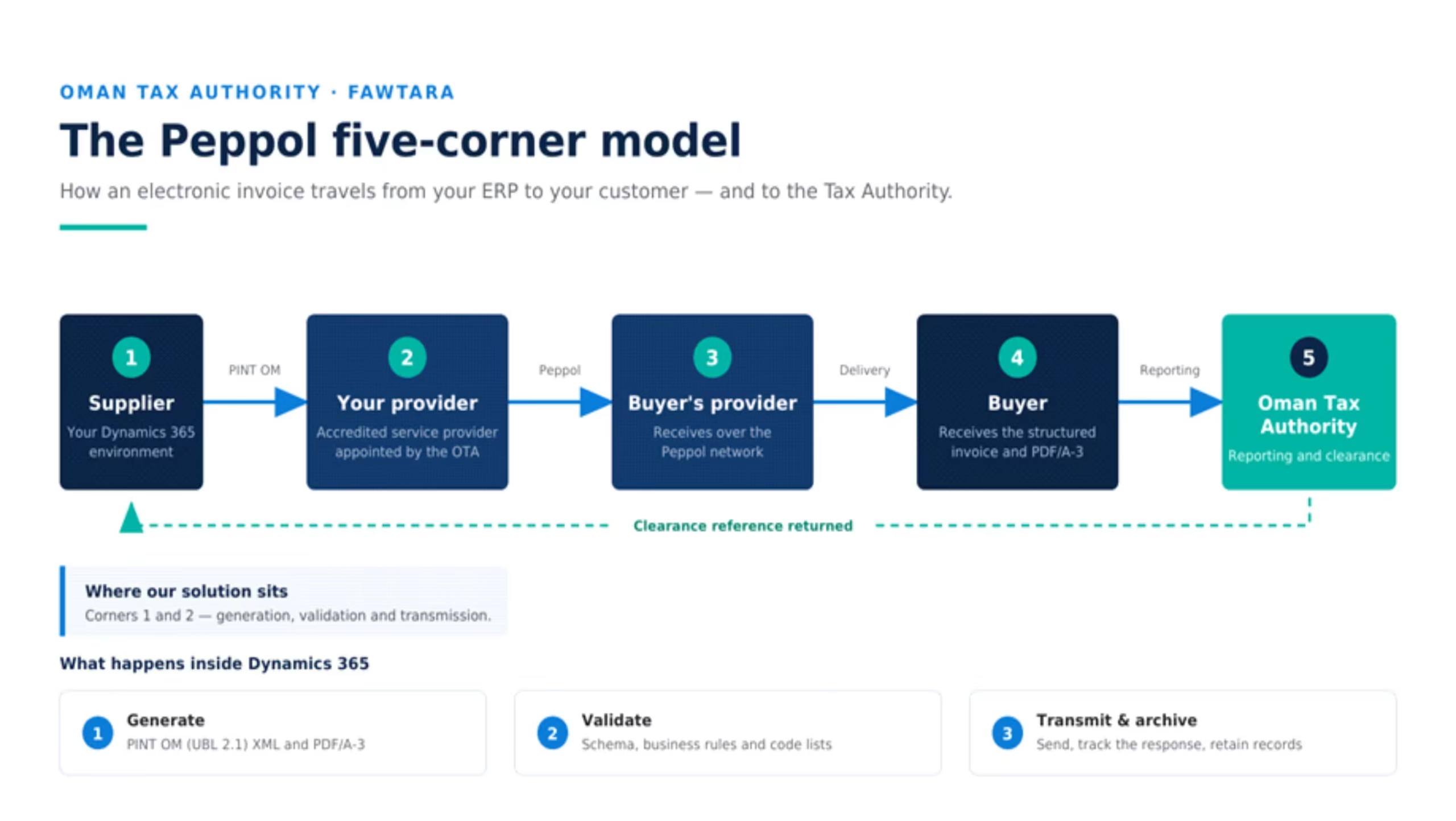
Diagram of the Peppol five-corner model used by Oman’s Fawtara e-invoicing programme

Key Highlights

Purpose-built for the Oman Tax Authority’s Fawtara programme

Available for both Dynamics 365 Business Central and Finance & Supply Chain Management

Generates PINT OM (UBL 2.1) structured invoices with accompanying PDF/A-3

Connects to your accredited service provider over the Peppol network

Validates invoices before they leave your system, so rejections are caught early

End-to-end assessment, implementation, testing and support from Dynamics Center

What Fawtara Requires

Fawtara is built on the Peppol framework. The Oman Tax Authority was approved as a Peppol Authority in January 2026 and adopted a five-corner exchange model, in which invoices pass from the supplier to the supplier’s accredited service provider, on to the buyer’s service provider and the buyer, with reporting to the Tax Authority.

In practice, that means four things change for a finance team in Oman.

A structured invoice format

Invoices must be issued as PINT OM, the Oman specification built on UBL 2.1 XML, with a PDF/A-3 document carrying the structured data. A PDF emailed to a customer is no longer an invoice in the regulator’s eyes.

Delivery through an accredited service provider

Documents are transmitted through a service provider accredited by the Oman Tax Authority, which validates the invoice and routes it over the Peppol network. Your ERP has to speak that provider’s API.

Validation your data has to survive

Invoices are checked against schema, business rules and code lists. A customer without a tax registration number, or a unit of measure outside the approved code list, is enough to cause a rejection.

Records you can produce on demand

Invoice records must be retained electronically for the statutory period — ten years in general, longer for real estate records — and be retrievable for audit.

Book a free strategy session

Choose Your Dynamics 365 Platform

Dynamics Center offers Fawtara compliance for both Microsoft ERP platforms. The compliance logic, terminology and reporting are consistent across the two, which matters for groups running both in the same region.

Oman E-Invoicing for Dynamics 365 Finance & Supply Chain

For larger organisations running Dynamics 365 Finance and Supply Chain Management, often across several legal entities. Parameters are configured per legal entity, so entities that fall into different Fawtara phases can go live on their own schedule.

Explore Fawtara for Finance & Supply Chain

Oman E-Invoicing for Dynamics 365 Business Central

For small and mid-sized businesses running Business Central online. A single setup page, automatic submission on posting, and a role centre that shows the finance team exactly what needs attention.

Explore Fawtara for Business Central

The Fawtara Timeline

  • January 2026 — The Oman Tax Authority is approved as a Peppol Authority, formally adopting the Peppol framework for Fawtara.
  • August 2026 — The pilot begins with an initial group of large taxpayers.
  • 1 April 2027 — Mandatory for taxable persons with annual supplies above OMR 5 million.
  • 1 October 2027 — Mandatory for taxable persons with annual supplies at or below OMR 5 million.

A later phase covering government entities is expected, and the Tax Authority has not yet confirmed its date. Businesses should confirm their own phase and obligations against the latest guidance issued by the Oman Tax Authority.
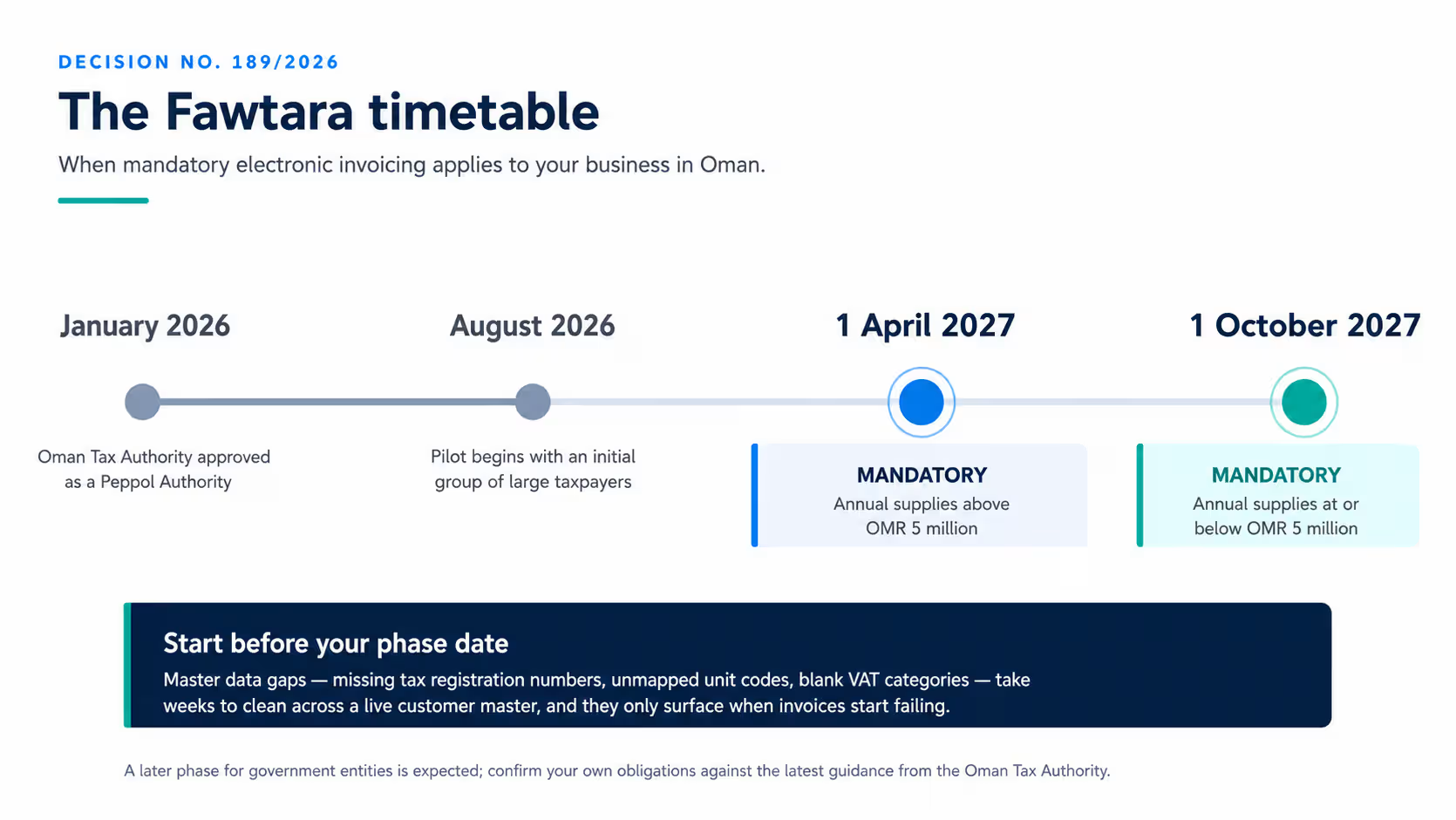
Timeline of Oman Fawtara e-invoicing phases under Decision No. 189/2026
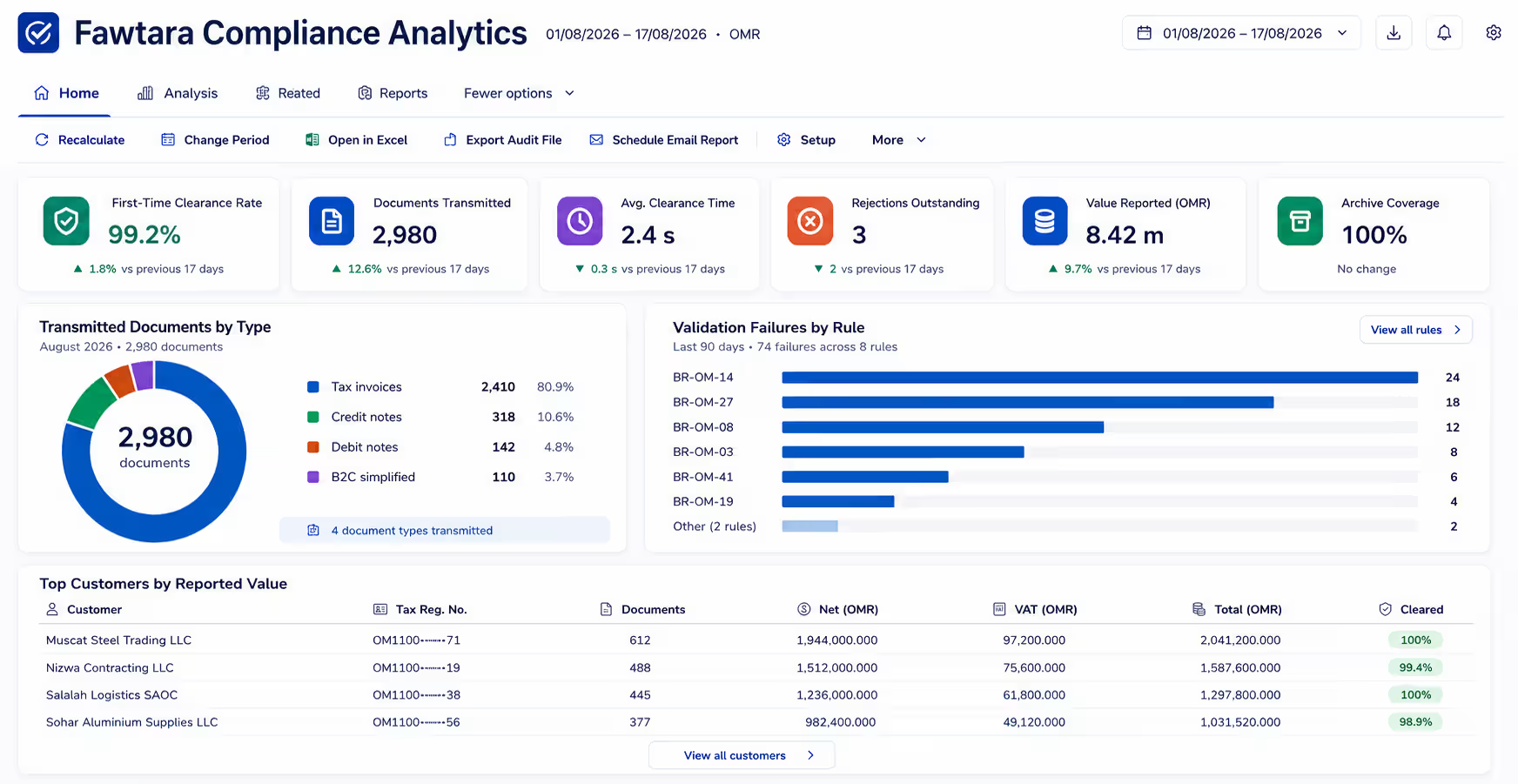
Fawtara compliance analytics in Microsoft Dynamics 365 showing clearance rate and validation failures

Why Start Before Your Phase Date

Non-compliance carries financial penalties under the VAT law, up to and including suspension for serious or repeated breaches. But the practical risk for most businesses is not the penalty — it is the data.

The most common causes of invoice rejection are mundane: a customer record with no tax registration number, a unit of measure that was never mapped to the approved code list, a VAT category code left blank on a single line. Individually they take minutes to fix. Across a live customer master of several hundred accounts, they take weeks, and they surface only when invoices start failing.

Starting early converts the deadline from an event into a routine. A readiness assessment identifies the gaps while there is still time to close them in the ordinary course of business, rather than in the week before go-live.

How Dynamics Center Helps

Fawtara Readiness Assessment

We review your invoicing processes, ERP environment and master data against the Fawtara requirements and give you a prioritised list of what needs to change, with effort estimates.

Solution Implementation

We install and configure the Oman e-invoicing solution in your Dynamics 365 environment, connect it to your chosen accredited service provider, and align it to your document types and business processes.

Master Data Remediation

We identify customers, items and units of measure that would fail validation, and work with your team to correct them before they cause rejections.

End-to-End Testing

We run full invoice, credit note and debit note cycles in the service provider’s sandbox, verifying validation, transmission and clearance before anything reaches production.

Go-Live and Cutover

Our team supports the production switchover so day-one invoicing continues without interruption.

Ongoing Support and Regulatory Updates

Fawtara is a phased programme and the specification will evolve. We keep your solution current and support your team as the rules change.

Why Choose Dynamics Center?

Dynamics Center is a certified Microsoft partner specialising in Dynamics 365, with e-invoicing solutions already published on Microsoft AppSource for the UAE and Saudi Arabia. We have taken businesses through the ZATCA rollout in Saudi Arabia and the UAE e-invoicing programme, and that experience shapes how we approach Oman: assess the data first, test the full document lifecycle, and go live with no surprises.

We do not apply a single template to every client. We assess your environment, understand how your finance team actually works, and configure a solution that fits your processes rather than forcing your processes to fit the software.

Why Businesses Choose Dynamics Center

Experienced Microsoft Dynamics 365 consultants across Business Central and Finance & Supply Chain.
Proven regional e-invoicing delivery — solutions published on Microsoft AppSource for the UAE and Saudi Arabia.
Provider-independent approach: you choose your accredited service provider.
Structured methodology for assessment, configuration, testing and go-live.
Master data remediation, not just software installation.
Complete user training and knowledge transfer.
Dedicated post-implementation support and regulatory updates.
Solutions designed to scale as your business and the Fawtara programme evolve.

Frequently Asked Questions

What is Fawtara?
Fawtara is the national electronic invoicing programme of the Oman Tax Authority. It requires businesses to issue invoices in a structured electronic format and exchange them through accredited service providers over the Peppol network, with reporting to the Tax Authority.
When does Oman e-invoicing become mandatory?
Under Decision No. 189/2026, taxable persons with annual supplies above OMR 5 million must comply from 1 April 2027, and those at or below OMR 5 million from 1 October 2027. A pilot began with an initial group of large taxpayers in August 2026. Businesses should confirm their own phase against the latest Tax Authority guidance.
What invoice format does Oman require?
Fawtara uses PINT OM, the Oman specification based on UBL 2.1 XML, together with PDF/A-3. Invoice data is validated against the Tax Authority’s schema, business rules and code lists before it is accepted.
Do I need an accredited service provider?
Yes. Invoices are transmitted to the Oman Tax Authority through a service provider accredited by the Authority. Dynamics Center’s solution is provider-independent, so you can choose your provider and change it later without re-implementing.
Which document types are in scope?
Tax invoices, credit notes and debit notes are all issued electronically under the Fawtara framework. Our solution handles each of them, including the reference back from a credit note to the original invoice.
Is a QR code required?
A QR code is required on the human-readable document for business-to-consumer invoices, encoded to the Tax Authority’s specification.
How long do I need to keep electronic invoices?
Invoice records must be retained for the statutory period — ten years in general, with a longer period applying to real estate records. Our solution archives the signed XML, the PDF/A-3 and the clearance reference together against the source document.
Can Microsoft Dynamics 365 support Fawtara compliance?
Yes. Both Dynamics 365 Business Central and Dynamics 365 Finance and Supply Chain Management can be configured with the appropriate localisation and integration components to support Fawtara-compliant invoicing. Dynamics Center implements and configures the solution for your environment.
How long does implementation take?
Typically two to four weeks, depending on the quality of your master data, the number of document layouts in use and the number of legal entities in scope. We confirm the timeline after a readiness assessment.
Do you support businesses operating in more than one GCC country?
Yes. We deliver e-invoicing compliance for the UAE and Saudi Arabia as well as Oman, so groups operating across the region can work with a single partner and a consistent approach.

Ready to Prepare for Fawtara?

Whether your phase date is April 2027 or October 2027, the work that determines whether go-live is smooth — cleaning master data, mapping code lists, testing the full document lifecycle — is best started well before it.

Contact Dynamics Center to arrange a Fawtara readiness assessment for your Dynamics 365 environment and receive a clear plan, timeline and estimate.

×

    Get in Touch for Pricing

    LinkedIn WhatsApp Chat info@dynamicscenter.com
    ×